
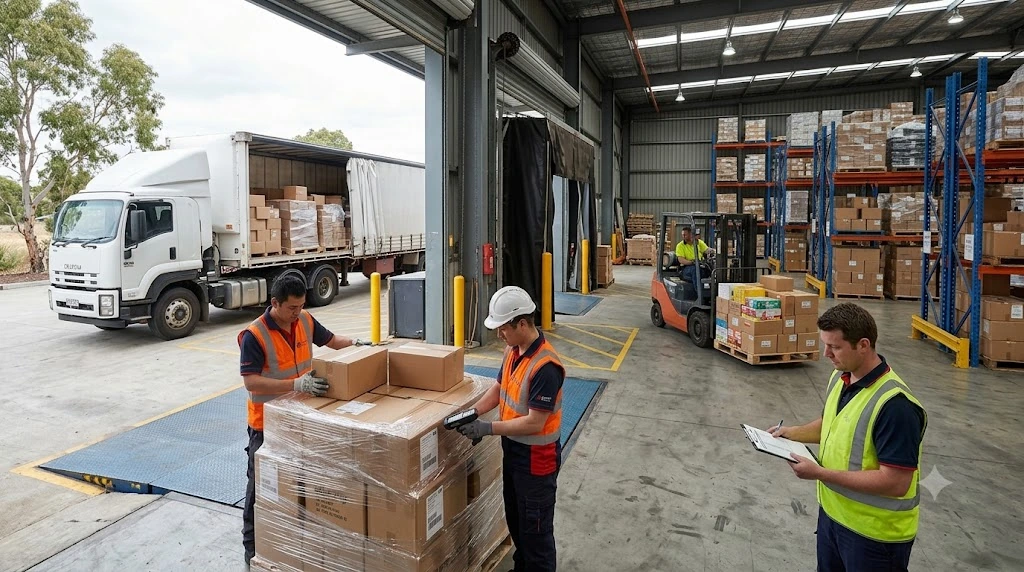
Inventory replenishment beyond the port
China-to-Australia Warehouse Delivery
Australia overseas warehouse delivery from China is a managed freight solution for sending inventory to a 3PL provider, ecommerce fulfilment warehouse, distributor or other commercial storage facility. The shipment must be planned around both international freight requirements and the receiving rules of the Australian warehouse.
ASP Cargo can review air and sea options for loose cartons, palletised cargo and cubic-metre shipments. Final delivery may require an appointment, booking reference, pallet labels, carton labels, purchase-order number or advance shipping notice. These requirements should be collected before the shipment leaves China.
Receiving destinations
Supported Warehouse Types
3PL fulfilment warehouses
Third-party facilities storing, picking and dispatching inventory for ecommerce or wholesale customers.
Marketplace warehouses
Facilities that receive inventory for marketplace fulfilment or seller-managed distribution.
Retail distribution centres
Warehouses receiving commercial stock under purchase-order, booking and pallet standards.
Brand-owned warehouses
Private facilities operated by the importer, wholesaler or Australian subsidiary.
Shared overseas warehouses
Facilities used by multiple sellers, sometimes identified by internal abbreviations such as WYT, 4PX, GC, BM or CL.
Temporary project storage
Warehousing used before staged delivery to a site, customer or event.
Warehouse abbreviations are used only when the customer confirms the actual facility and delivery instructions. Similar abbreviations can refer to different providers or locations.
Keep Australian inventory available
Warehouse Replenishment Use Cases
Ecommerce stock replenishment
Send recurring inventory to an Australian fulfilment partner so local orders can be picked and dispatched. The replenishment plan should consider forecast sales, existing stock and the receiving capacity of the warehouse.
Wholesale and retail distribution
Move cartons or pallets to a distributor before local delivery to stores, dealers or business customers. Purchase-order references and pallet standards may be compulsory.
Consolidated supplier cargo
Goods from several Chinese suppliers can be received at a consolidation warehouse, checked, combined and dispatched to one Australian facility. This can reduce fragmented bookings and improve carton control.
Seasonal inventory
Peak-season, promotional and event stock should be booked with enough time for international transport, customs and warehouse receiving. A warehouse can restrict bookings during busy periods.
Select the route by volume and urgency
Air and Sea Warehouse Delivery Options
Air freight replenishment
Air is suitable for urgent inventory, product launches and stock-out prevention. Pricing normally uses chargeable weight. After customs clearance, cargo can move to the warehouse as loose cartons or pallets, subject to the local carrier’s limits.
Sea freight replenishment
Sea freight is suitable for larger or planned inventory. Cargo may be quoted by cubic metre, weight or container. The receiving warehouse may require a palletised delivery even when the international leg moved as loose cartons.
Full-container warehouse delivery
For larger volumes, a full container can move to a warehouse or unloading site after customs and delivery arrangements are confirmed. Container detention, unloading time and site access must be planned in advance.
Supporting services include sea freight, air freight, 3PL services and customs clearance.
Match the warehouse handling method
Carton, Pallet and CBM Shipping
| Shipment format | Best suited to | Key checks |
|---|---|---|
| Loose cartons | Smaller replenishment shipments and warehouses that accept carton deliveries. | Carton labels, count, dimensions, single-carton weight and receiving reference. |
| Pallets | Larger commercial deliveries and warehouses with forklift receiving. | Pallet size, height, gross weight, wrap, labels and stackability. |
| CBM cargo | Sea consolidation where the shipment is priced by occupied volume. | Accurate packed volume, minimum charge and delivery handling. |
| Full container | High-volume inventory and warehouse or site unloading. | Container access, unloading time, dock availability and detention risk. |
Do not assume the warehouse will accept floor-loaded cartons, non-standard pallets or very heavy single pieces. Obtain the receiving guide and share it before the freight booking is finalised.
Prevent refused deliveries
Delivery Appointment and Warehouse Receiving Requirements
- Full warehouse name, address and postcode
- Receiving hours and appointment process
- Purchase order, inbound order or booking reference
- Carton and pallet labels
- Advance shipping notice where required
- Forklift, dock and tail-lift requirements
- Maximum pallet dimensions and weights
- Contact person for delivery exceptions
If a delivery arrives without the required booking or reference, the warehouse may refuse it. Redelivery, waiting time, storage and address-correction costs can then apply.
Warehouse delivery can move under DDP or DDU terms depending on cargo eligibility and the importer arrangement. See DDP Shipping to Australia for the customs responsibilities.
Complete landed and receiving costs
Warehouse Delivery Cost Factors
- Origin pickup and consolidation in China
- Air chargeable weight or sea cubic metres
- Customs, duty and GST scope
- Carton, pallet and warehouse handling
- Appointment and local delivery
- Tail-lift, waiting, storage or redelivery
- Regional or remote postcode
Published references include the Australia DDP Cost directory, warehouse-style delivery by CBM, carton delivery option and air warehouse delivery option. Confirm the actual warehouse before relying on any route.
Replenish your Australian stock
Request an Overseas Warehouse Delivery Quote
Send the warehouse address, receiving instructions, carton or pallet list, commodity, value and customs preference.
Common questions
Overseas Warehouse Delivery FAQ
Can you deliver to any 3PL warehouse in Australia?
We can review most commercial warehouse destinations, subject to postcode coverage, receiving rules, cargo size and appointment availability.
Do I need a warehouse appointment?
Many warehouses require one, especially for pallets or larger deliveries. Confirm the receiving process before dispatch.
Can several suppliers be consolidated into one warehouse shipment?
Yes. Cargo can be received and consolidated in China when supplier details, packing lists and dispatch deadlines are coordinated.
Can warehouse replenishment move by DDP?
Eligible cargo can be reviewed for DDP. The importer, commodity, value and documentation must be confirmed.
What happens if a warehouse refuses delivery?
The carrier may need to return the cargo to a depot and arrange redelivery. Waiting, storage and redelivery charges can apply.